


Felt Fruit Tree Activity Board – Montessori Learning Toy
Felt Fruit Tree Activity Board – Montessori Learning Toy
Offer ends on
- 🧠 Develops Fine Motor Skills
- 🍎 Learning Through Play
- 🎨 Encourages Creativity
Couldn't load pickup availability

"Our child loves playing with the activity board every day and enjoys discovering new fruits and vegetables through play. At the same time, their fine motor skills have improved, and they stay engaged in independent play for much longer."
Felt Fruit Tree Activity Board – Discover the World Through Play
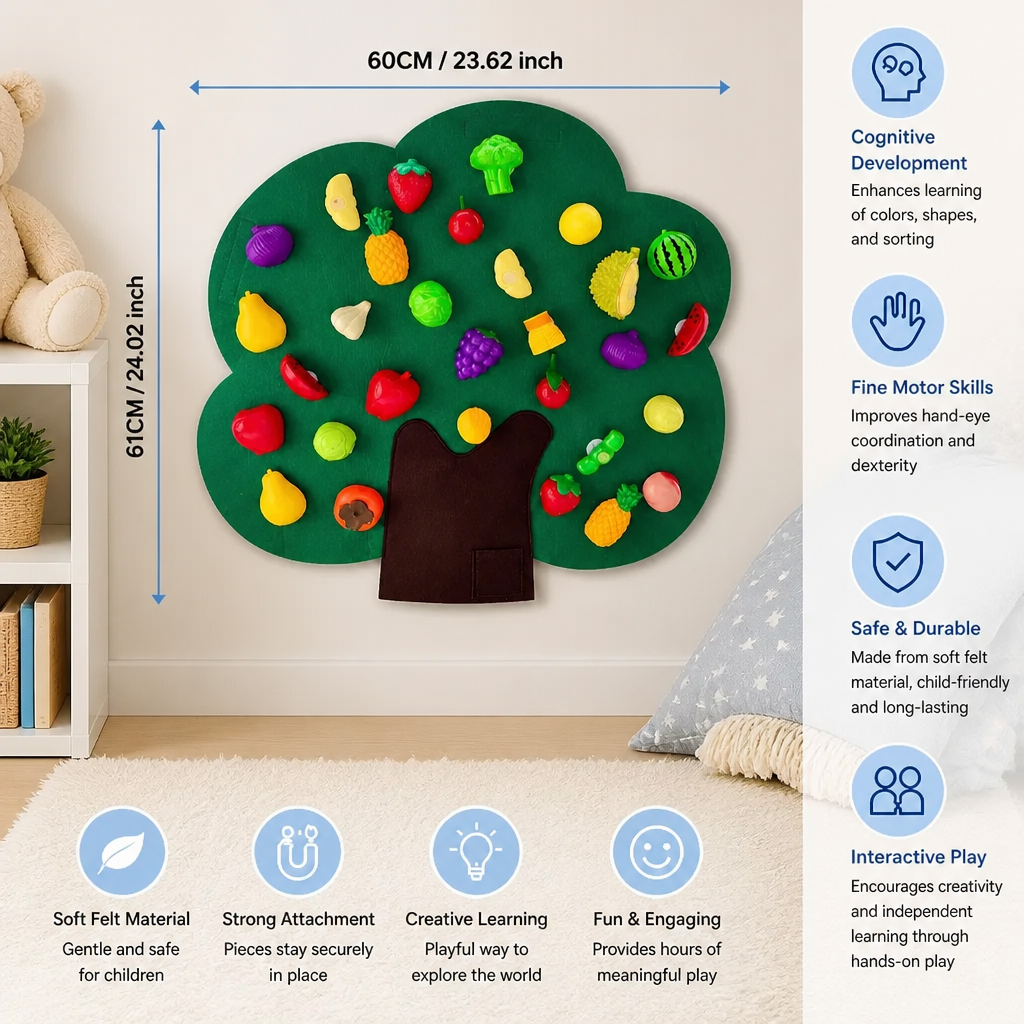
Turn every day into an exciting learning adventure with the Felt Fruit Tree Activity Board. The beautifully designed fruits and vegetables encourage your child to grasp, sort, and explore through hands-on play. It naturally promotes concentration, fine motor skills, and creativity—without the need for screens.

Key Features:
- 🍎 Learning Through Everyday Play – Children naturally discover colors, shapes, and different fruits and vegetables while developing curiosity and early learning skills.
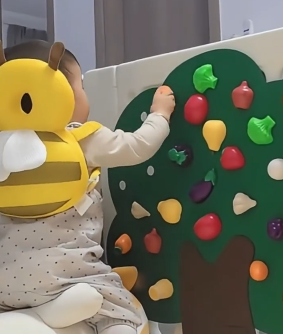
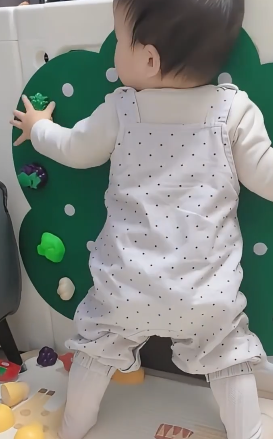
- 🖐️ Develops Fine Motor Skills & Hand-Eye Coordination – Attaching, removing, and repositioning the pieces helps improve dexterity, coordination, and precise movements.
- 🌳 Endless Ways to Play – The colorful pieces inspire sorting, matching, and imaginative role-playing for long-lasting fun.
- 💚 Lightweight, Soft & Child-Friendly – The felt board offers a pleasant tactile experience and is ideal for everyday use in the nursery, playroom, or while traveling.

The Perfect Solution for Playful Learning
Many children quickly lose interest in conventional toys or spend too much time in front of screens. The Felt Fruit Tree Activity Board offers an engaging alternative that combines learning and play. By independently placing and exploring the colorful fruits and vegetables, children naturally develop important motor and cognitive skills. At the same time, concentration, logical thinking, and creativity are encouraged through fun, hands-on activities—day after day.
Create Meaningful Learning Moments Through Play
Give your child an engaging activity that is both fun and educational. The Felt Fruit Tree Activity Board accompanies little explorers through countless exciting moments of learning and play.


Fictional review-style examples, not genuine customer reviews:
My daughter likes choosing produce according to the weather outside. She creates bright arrangements on sunny days and darker combinations when it rains.
The board encourages independent decision-making during play. My child confidently selects, arranges, and changes the produce herself.
My grandson enjoys setting up a pretend roadside produce stand. He organizes the display before inviting everyone to shop.
We use the activity to practice counting from a random starting number. My daughter adds one piece for each number she says.
We created an imaginary orchard map using different areas of the board. My child assigns each section a name and purpose.
The tree works well for practicing short question-and-answer exchanges. My daughter asks what, where, and how many while we play.
The activity provides a clear space for experimenting with categories. My son changes his sorting method whenever he discovers another connection.
My son likes collecting only the pieces that match a chosen theme. He then returns them and starts again with a new rule.
My toddler enjoys finding the brightest item on each part of the tree. The visual search keeps her interested and attentive.
My child likes pretending that certain foods have special powers. His imaginative stories make every play session feel different.
We practice estimating how many pieces are on the tree before counting them. My daughter enjoys seeing how close her guess was.
The board encourages my daughter to recognize patterns in both color and shape. She enjoys creating combinations for me to continue.
We use the pieces to practice repeating short instructions in the correct order. My son listens carefully before beginning the task.
My niece enjoys selecting foods for an imaginary picnic basket. She describes every item as she packs it for her dolls.
The felt produce makes simple lessons more tactile. My child learns best when he can touch and move the examples himself.
My child enjoys organizing the harvest from top to bottom. She checks the positions carefully before declaring the tree complete.
We created a game where each correct answer earns one piece for the tree. My daughter stays motivated as the branches gradually fill.
The activity inspires useful conversations about where food comes from. My son now distinguishes between farms, gardens, and grocery stores.
We use the board to practice the concepts of same and different. My toddler compares two pieces and points out visible similarities.
The tree provides an inviting background for puppet stories. My daughter lets the puppets choose and collect their favorite produce.
The board keeps my preschooler engaged during waiting periods at home. She creates new arrangements without asking for another activity.
We practice sorting foods by their typical colors in real life. My child likes discussing whether some items can appear in other colors.
My son uses the pieces as tokens in simple counting games. He moves one item for every number or answer.
My daughter enjoys turning the empty tree into a gradual growing project. She adds a few pieces at a time while narrating the process.
We use the produce to practice simple comparisons such as bigger, smaller, wider, and narrower. My child explains her choices while pointing to the shapes.
The activity offers a good balance between structure and creativity. My son understands the basic idea but can invent his own rules.
My grandson enjoys creating a harvest for each day of the week. He changes the selection and counts the pieces every morning.
The tree gives our children a shared focus during cooperative play. They discuss their ideas and agree on where pieces should go.
We play a game where one food is secretly chosen as the treasure. My daughter follows location clues until she discovers it.
The activity encourages careful use of both hands. My child holds the board steady while positioning each piece precisely.
We make small counting stories using the removable foods. My preschooler acts out each problem and finds the answer independently.